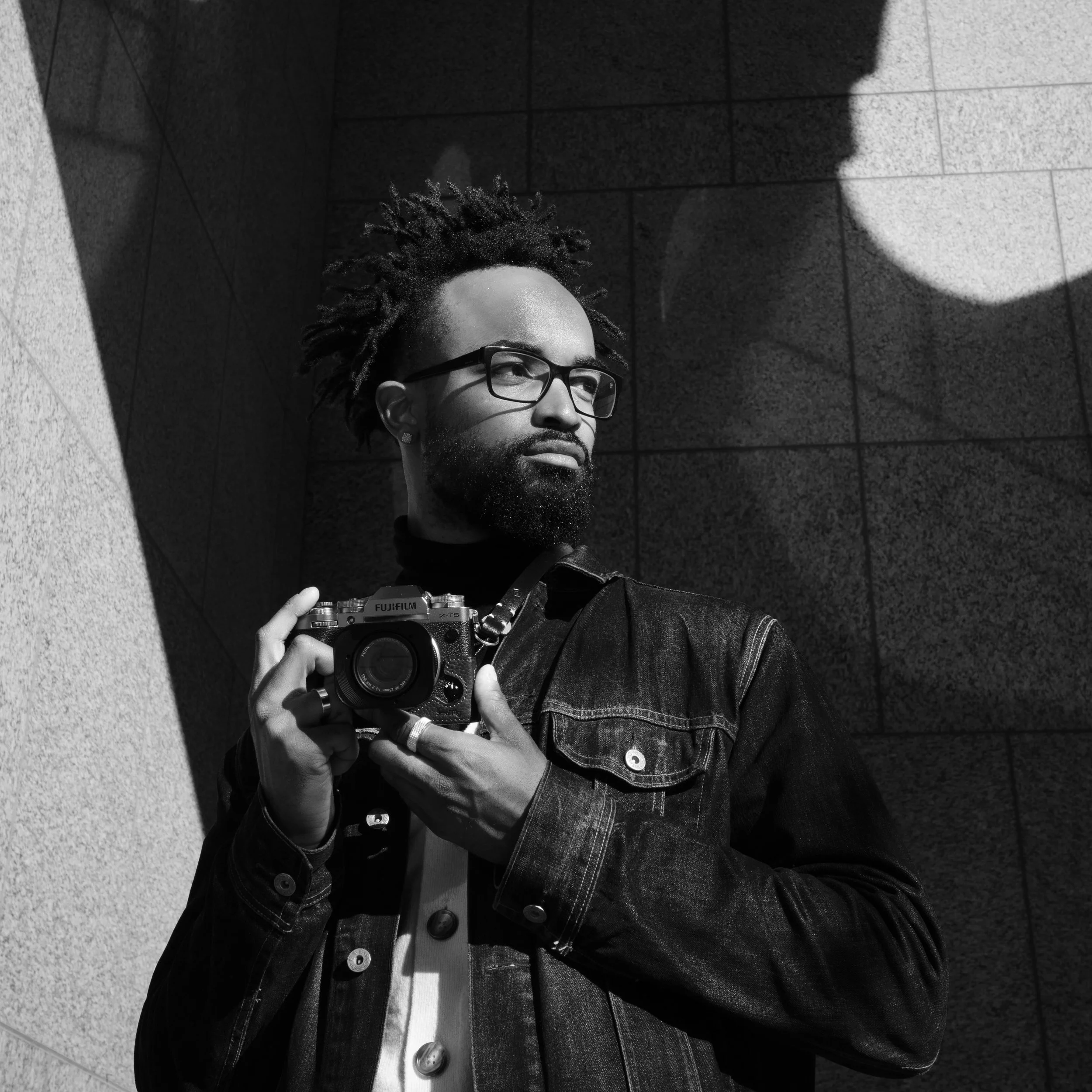
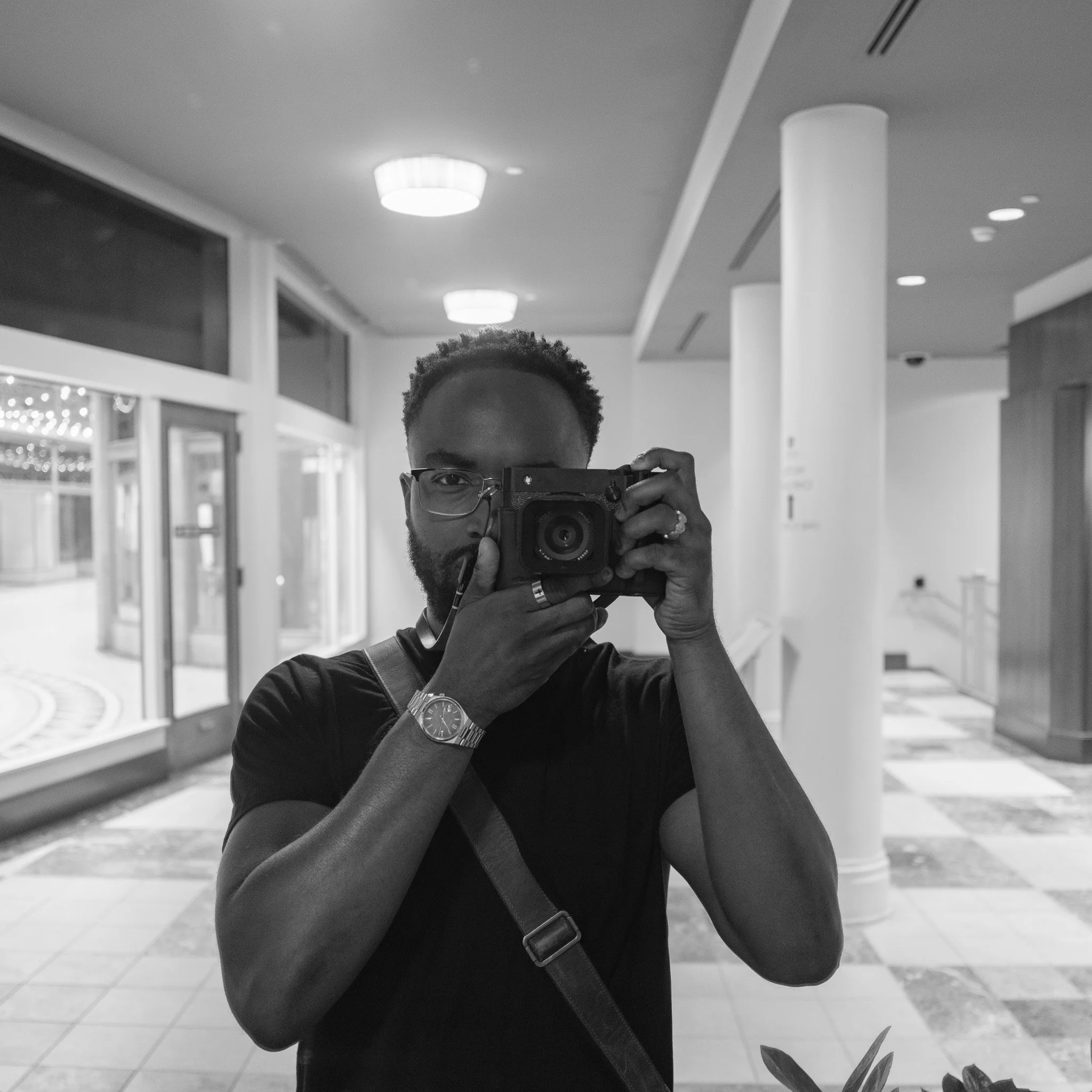
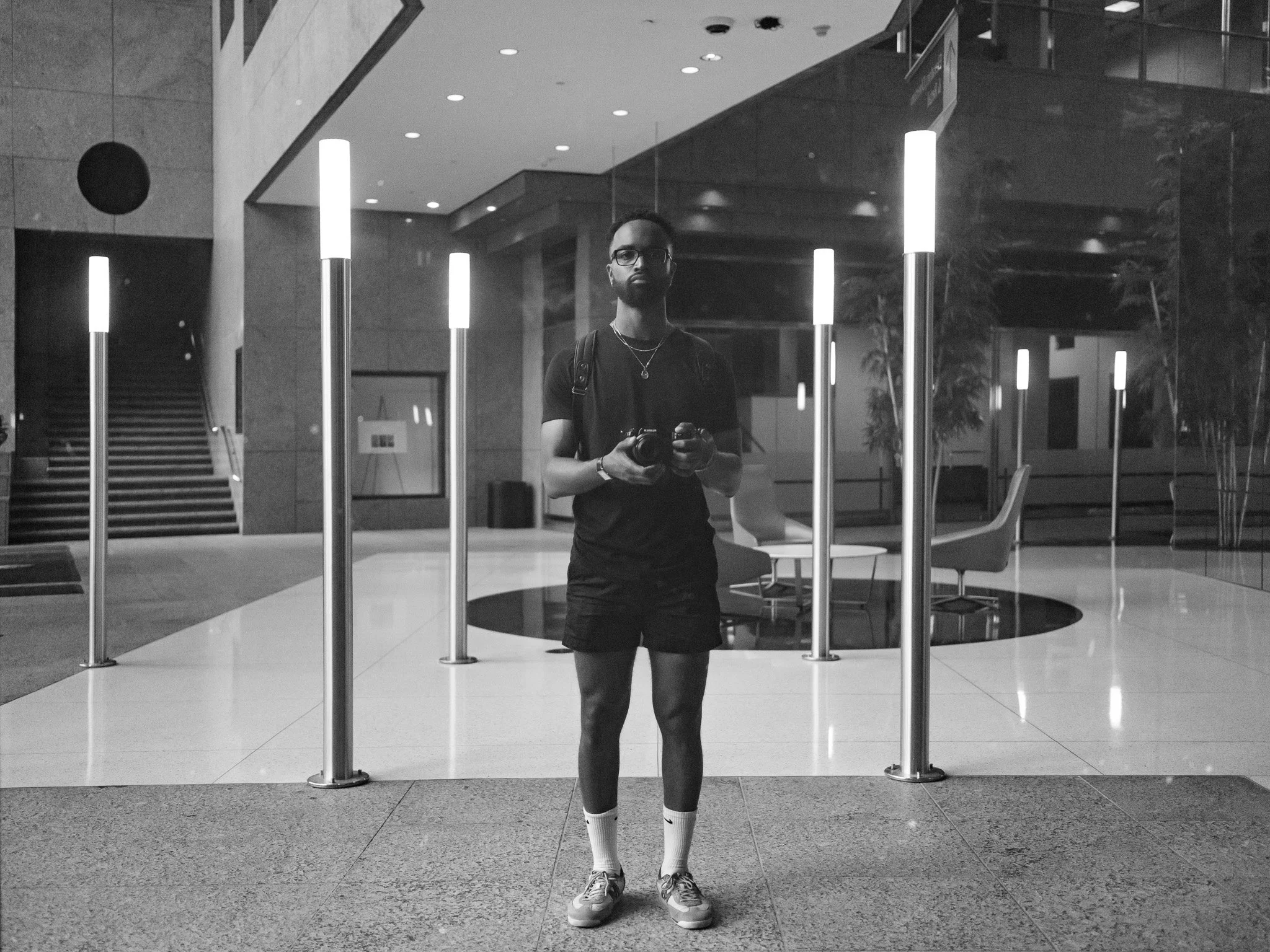
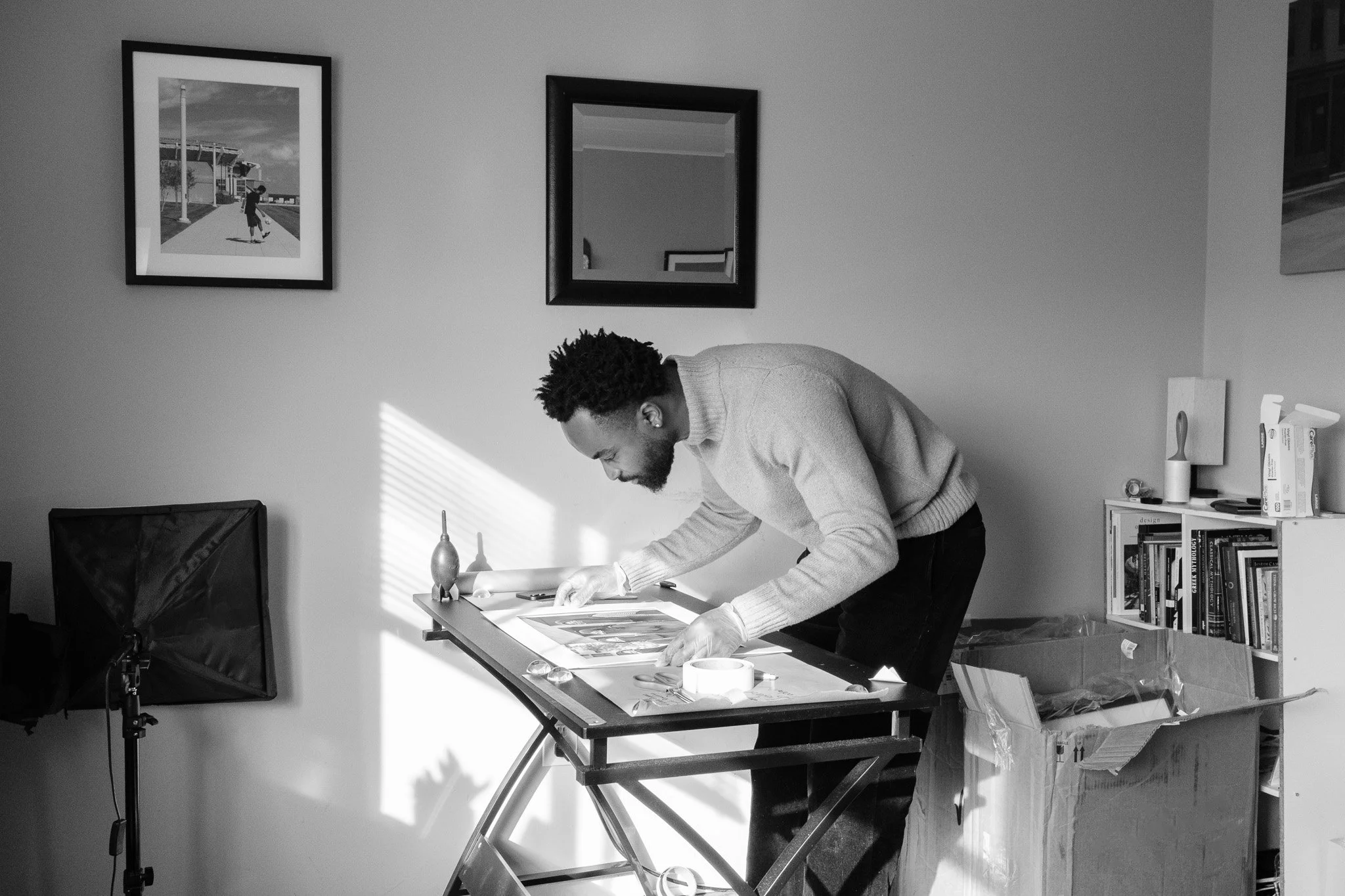
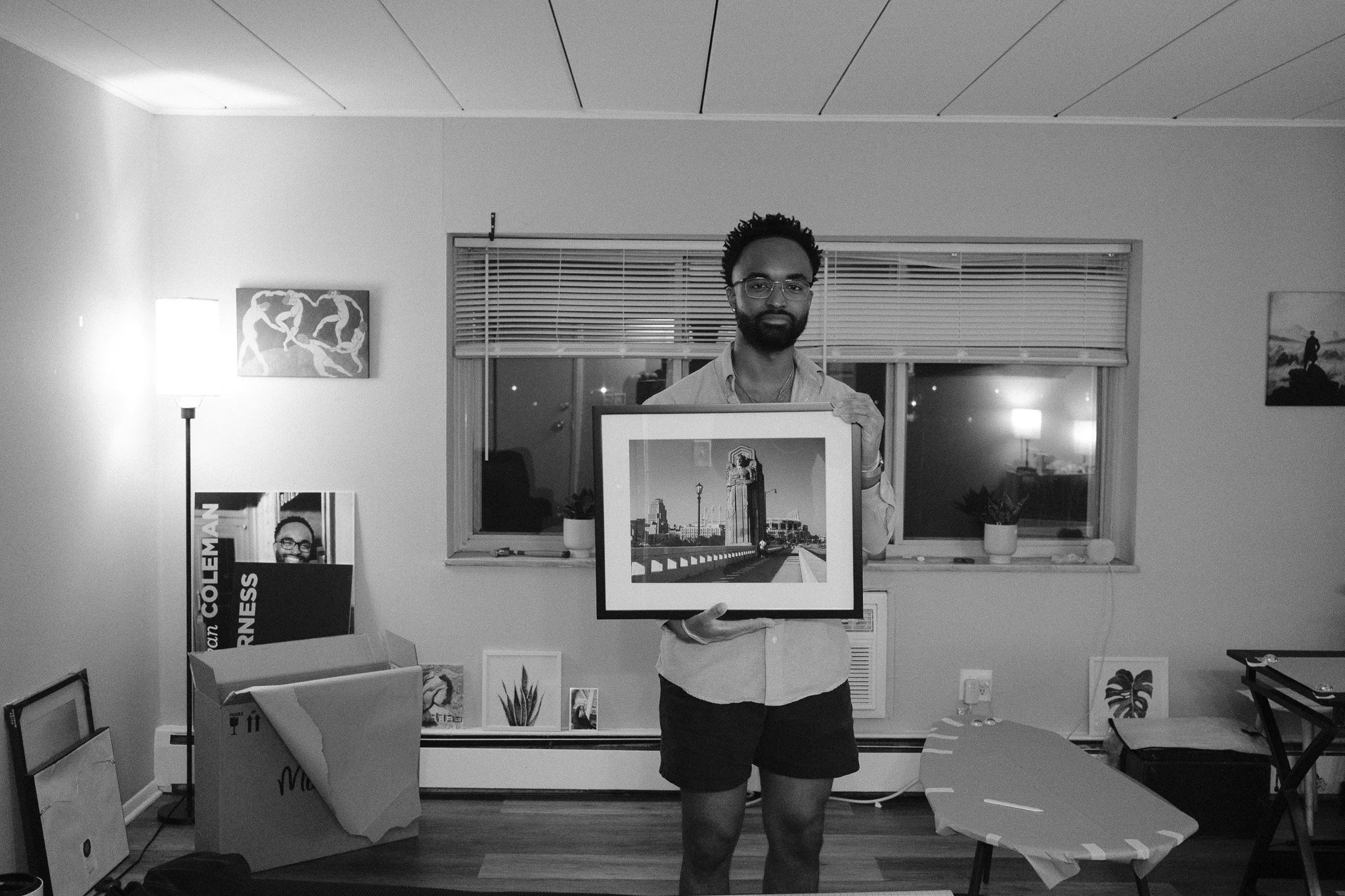
Doriyan Coleman (b. 1996) is a Cleveland-based Street Photographer, Writer, and Educator. Through his craft, Doriyan documents the lyricism of human experience. Whether it’s subtle gestures, nature's interplay of light, or their relationship with the built environment, his work explores themes of individuality, community, and the sublimity of the ordinary. By virtue of these dynamics, his imagery acts as both artistic impressions and historical records of the spaces he photographs.
His work has been exhibited by The Cleveland Museum of Art, University Circle, Cleveland Play House, and more. As University Circle’s second-ever Artist-In-Residence (2025-2026) and the TeachArtsOhio Artist-In-Residence (2022-2023), he’s taught innovative, insightful photography programs to middle schoolers and community elders alike.
Doriyan believes that a street in Cleveland carries the same artistic value as 1970’s New York or a Renaissance canvas, and that within each passerby is a world worth witnessing. Creating in both Black-and-White and Color imagery, his unscripted approach finds truth in unguarded moments and evokes the dignity of each subject.
He was shaped in the tradition of humanist photographers like Gordon Parks, Dorothea Lange, and Andre Kertesz, who understood the camera as a moral instrument, and Harlem Renaissance painters like Archibald Motley, who captured the social energy of city spaces. Cleveland itself — its textures, its people, and its refusal to be anything other than what it is — has been the incubator of his visual identity.
He photographs because powerful stories reside in the mundane. The transience of everyday motion is often too fleeting to contemplate in real time, but through his candid frames he meditates on culture, history, and societal relations. His prints, exhibitions, and books are how those moments live on. Through his print practice, he creates communal spaces where people gather around shared experience, and works that can be owned, returned to, and passed down with care.
Doriyan maintains a prominent online presence, producing his insightful newsletter, Camera Flow, which explores the art of photography, creative philosophy, and the artist’s relationship with modern culture. On his self-titled YouTube channel, he explores the fundamentals of street photography and camera gear, garnering nearly 9,000 subscribers and one million views between both outlets.
Doriyan firmly believes that through photography and education, we can see each other with greater understanding and jointly reflect on the most meaningful aspects of our existence.